
Christopher Iwestel Kinman
Family therapist, philosopher, writer, and educator.
Chris’s work begins with attention to the people, places, and other living beings around us. Across pastoral work, family therapy, teaching, and philosophy, he has returned to a question that continues to open new possibilities: what are the relationships that sustain a life?
Born in Ibadan, Nigeria, Chris lived in England before his family moved to Saskatchewan when he was six. His later life took him through other parts of Canada and the United States, with British Columbia becoming central to his work and thought.
In his doctoral thesis, Chris recalls his mother teaching him the names of plants and animals, collecting and pressing wildflowers with him, and nurturing his fascination with insects, frogs, birds, and fish. She also taught him respect for the Indigenous children and families she worked with as an educator.
As a young person, he wanted to become a naturalist. That early interest would remain a thread through a life whose professional directions were still unfolding.
Chris’s first professional path led through theology and pastoral work. During those years, he encountered Gregory Bateson, whose thinking connected the ecologies of nature with the ecologies of human living. Chris came to understand that his interest in the living world was still at the centre of his work.
He later left pastoral work and the church, trained in marriage and family therapy, and began working in British Columbia in 1991 as a child, youth, and family therapist in an addictions counselling program.
His work expanded into community practice, organizational consultation, and the education of counsellors. Through these settings, he continued to ask how people could be understood within the relationships, histories, and places that shape their lives. His books explore reflecting teams, Collaborative Action Planning, and ways of recognizing the gifts already circulating within communities.
In 1993, Chris was invited to provide child, youth, and family therapy services through the Sts’ailes Community School. In his thesis, he describes the enduring importance of learning from the families and community with whom he worked.
The relationships among people, land, rivers, and salmon became inseparable from his understanding of care. The Harrison and Chehalis rivers, and the larger Fraser watershed to which they belong, entered his life and thought through these particular connections.
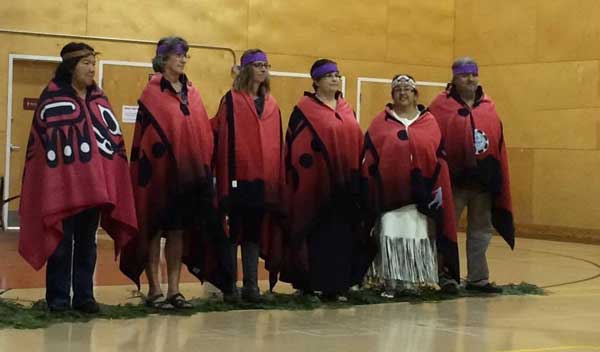
In 2015, Sts’ailes elders gave him the Halq’eméylem name Iwestel in ceremony. Chris explains its meaning as “one who guides” and includes it in his name in his academic work and his newest book. He writes about this relationship as a source of learning and responsibility.
Philosophy became an increasingly explicit expression of Chris’s lifelong inquiry. His therapeutic work had already led him into questions about how people know, how relationships form, and how institutions shape what can be seen and done. Reading, conversation, and writing gave him further ways to pursue those questions.
His doctoral work brought these concerns together. In 2019, his PhD thesis in Simon Fraser University’s Educational Theory and Practice program was approved. Its title was The River Carries that which the Mountains Cannot Hold: A Series of Geophilosophical Experiments with the Fraser River.
For Chris, this inquiry remained connected to the work of a naturalist. He approached philosophy through encounters with a living world: land and water, people and other creatures, memory and history. Ideas were to emerge from those relationships and find ways to return to them.
The thesis gives depth to his identity as a philosopher. It gathers a lifetime of practice into an exploration of how thought can stay responsive to the places and lives from which it arises.
— Christopher Iwestel Kinman, The River Carries that which the Mountains Cannot Hold (2019), p. 115
The thesis follows a pilgrimage through the Fraser River watershed, beginning at Sts’ailes, travelling toward the headwaters, and following the river through its landscapes toward the Salish Sea. Reflective passages alternate with philosophical experiments in which particular places open questions about education, care, power, and ecology.
Chris calls this geophilosophy: thinking that takes its relationships with land, water, histories, and living communities seriously. A forest, a city, a riverbank, or the history of a drained lake can change the questions a philosopher asks.
The title itself emerged in a shared encounter. Standing beside the Fraser in spring freshet with his friend and mentor Lynn Hoffman, Chris recalls that a phrase came to them. Each thought the other had created it. It became a gift neither could claim to own.
A phrase Chris recalls that both he and Lynn Hoffman remember the other sharing beside the Fraser River.
Chris describes his thesis as emerging within a living flow of conversation. His friendship with Lynn Hoffman was especially formative: together, they explored communal therapies, the rhizome, and the possibilities of working alongside people.
That inquiry belongs to a wider network of relationships. His thesis acknowledges connections with Harlene Anderson’s collaborative practice, Tom Andersen’s reflecting practices, the Irish Fifth Province group, Mary Olson, Colin Sanders, Papusa Molina, and many others.
His writings bring these conversations into contact with thinkers including Gregory Bateson, Gilles Deleuze, Félix Guattari, and Jacques Derrida. Philosophy and friendship continually meet in the work: ideas are encountered, questioned, and carried forward through relationships.
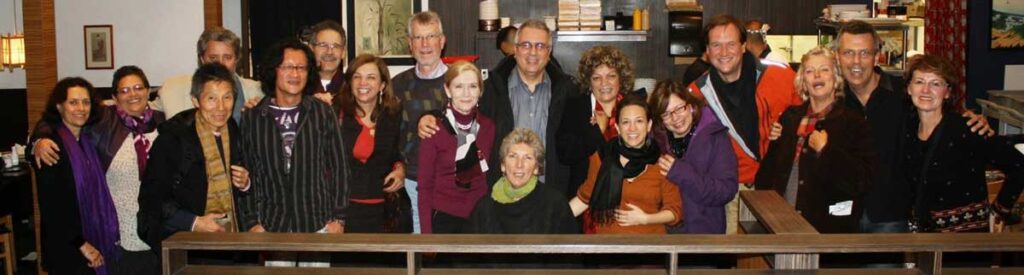
Conversation and friendship continued beyond the sessions at *Gregory Bateson and the Rhizome Century*, organized by Chris Kinman in Vancouver in October 2012. Inspired by Lynn Hoffman’s vision, the international gathering brought together therapists, thinkers, and community practitioners to explore ecology, collaboration, and the webs of relationship that sustain our lives.
The Territories of the Alive Trilogy explores the practice, politics, and spirituality of the gift. Essays sit alongside poetry, stories, and philosophical reflection.
His newest book, The Gift: An Idea that Changes Everything, extends that inquiry through personal reflections and contributions from friends and colleagues.
Photography gives Chris another way to attend to the living world. Images, like words, invite people to notice relationships and possibilities that might otherwise pass unseen.
His documentary work includes All Manner of Poetic Disobedience: Lynn Hoffman and the Rhizome Century. Recorded conversations extend this shared exploration of care, community, and relational practice.
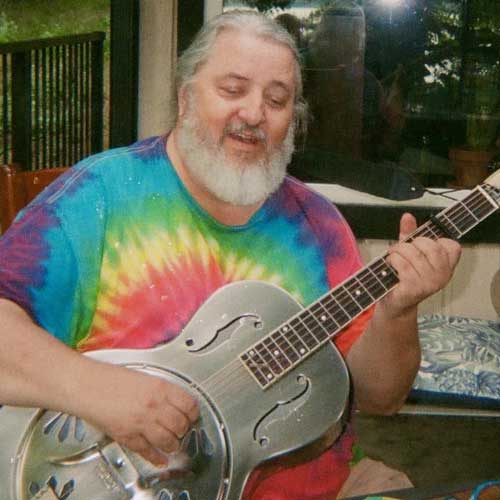
In his most recent writing, Chris looks back across the relationships, places, and ideas that have shaped his life. With a growing awareness of life’s finitude, he considers what we receive, what we pass on, and what continues beyond us.
His attention returns to the gifts moving through those relationships: kindness, humour, curiosity, love, and the possibilities people make available to one another. The work becomes an invitation to recognize the worlds that sustain us and to respond with care.
If Chris’s work connects with something you are exploring, we welcome hearing from you. This might be a conversation, a shared workshop, or an opportunity to bring his ideas into your professional community.
We are particularly interested in collaborative possibilities, where others can help shape, organize, and co-facilitate the work.
Tell us a little about your idea, who would be involved, and what you could contribute. Each invitation will be considered individually.
Form placeholder — Collaboration enquiries (add your Fluent Forms widget or shortcode here)